
Key points
- Loudness recruitment describes unusually rapid growth in perceived loudness as sound level increases, commonly discussed in relation to cochlear hearing loss.
- Hyperacusis concerns reduced tolerance to everyday sound; hearing loss does not automatically explain every sound-related difficulty.
- Describe audibility, loudness, discomfort, and pain separately, and ask how the assessment or device plan addresses each concern.
Loudness recruitment and hyperacusis describe different aspects of a sound experience. Recruitment concerns unusually rapid growth in perceived loudness as sound level increases, commonly in relation to cochlear hearing loss. Hyperacusis concerns reduced tolerance to everyday sounds. A hearing result or a single example cannot establish which description accounts for all your symptoms.
If you have been told you have recruitment but still have questions about sound discomfort or pain, ask the clinician to explain both the hearing findings and the symptoms. You can seek clarification without deciding in advance that the terms must be interchangeable or mutually exclusive.
What does loudness recruitment mean?
A 2022 research review describes loudness recruitment as abnormally fast growth of perceived loudness with increasing sound intensity, commonly associated with hearing loss involving the cochlea. South Warwickshire's NHS audiology information describes it as altered sound tolerance in people with hearing loss.
A hypothetical account might be: “I ask someone to speak up because I cannot follow them, but a further increase then feels much too loud.” That example makes a useful appointment question; it is not a test that proves recruitment.
Ask what the term means in your assessment. Which hearing findings support its use? Does it describe the difficulty hearing quieter speech, the growth in loudness, or another part of your account? An explanation tied to your own findings is more informative than a label on its own.
How does hyperacusis differ?
The NHS hyperacusis guide describes everyday sounds seeming unusually loud and sometimes painful. The focus is difficulty tolerating sound, rather than simply whether a quiet tone can be detected.
ASHA's guidance recognizes that hearing loss and hyperacusis can occur together. Having hearing loss therefore does not settle every question about sound intolerance. Equally, a normal hearing test does not establish the cause of a sound complaint.
Our guide to hyperacusis with a normal hearing test explains the distinction between quiet-tone thresholds and everyday sound tolerance. If pain is part of your experience, describe it explicitly rather than assuming the word loudness communicates everything you mean.
Do these terms reveal the cause of your symptoms?
The research review discusses proposed biological mechanisms and remaining uncertainties. It is a review of research, not a diagnostic tool for identifying the cause of an individual's symptoms from an online description.
You do not need to decide which part of the ear or nervous system is responsible before asking for care. A more useful question is: “Which findings explain the term you used, and what still needs assessment?”
If a clinician uses the terms differently from something you have read, ask them to define the words in the context of your care. Avoid using an online diagram, headphone demonstration, or volume comparison to settle the distinction yourself.
Bring separate examples of hearing and sound tolerance
Choose a naturally occurring occasion and distinguish the details you actually noticed:
- Audibility: What could you hear, and what was hard to make out?
- Loudness: What changed when the level changed, if you know?
- Discomfort or pain: What did you experience, where, and when?
- Activity: What became difficult, such as following a conversation?
- Device context: Were you wearing a hearing device, and which concern do you want reviewed?
- Question: What remains unexplained by your current assessment?
These are original discussion prompts, not a validated questionnaire. Leave uncertain details unknown. There is no need to increase sound or deliberately reproduce a difficult reaction to complete the note.
The hearing appointment guide includes questions about telling the clinic about discomfort before tests and asking how to request a pause.
What if you use or are considering hearing aids?
Bring the hearing findings and the sound-tolerance concern to the same discussion. Ask which goal a proposed device or adjustment is intended to address and what follow-up is available if a sound becomes uncomfortable.
Original questions you could adapt include:
- Does my current hearing assessment answer both the hearing difficulty and the sound-tolerance complaint?
- Would a device review be relevant to the difficulty I am describing?
- What should I report if a particular sound is uncomfortable or painful?
- Who should I contact before making further changes?
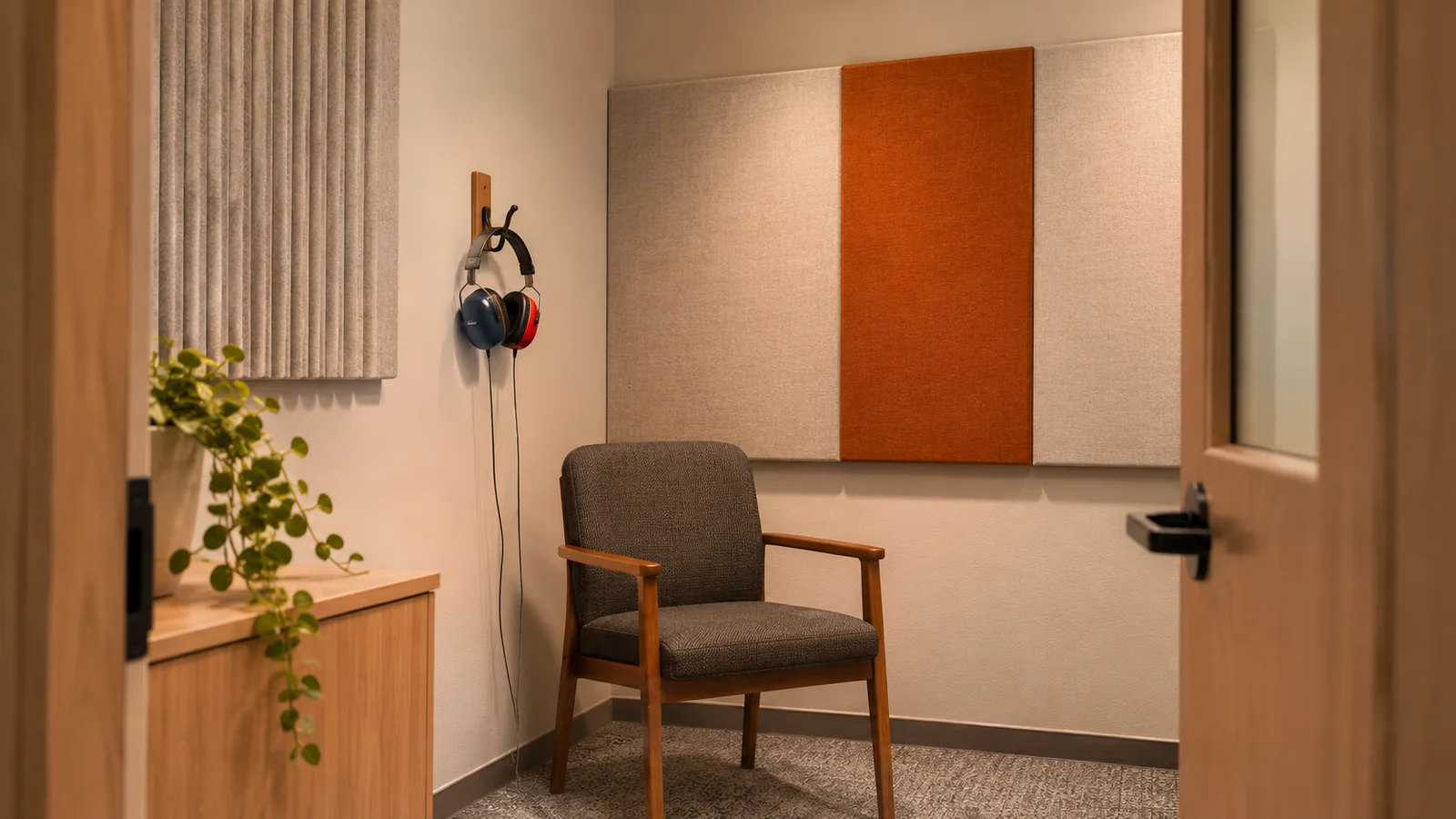
This article does not recommend a hearing-aid model, fitting, or setting. The editorial cover illustrates the hearing-care context; it does not imply that a hearing aid treats hyperacusis. Individual assessment and device advice belong with the qualified professional supporting your care.
You can keep the appointment question in your own notes or in Haelan's journal. The app does not measure hearing thresholds, diagnose recruitment, or fit hearing devices.
Keep a new hearing change separate
If hearing changes suddenly, seek immediate medical assessment. NIDCD identifies sudden hearing loss as a medical emergency. An earlier explanation involving recruitment or hyperacusis should not be used to dismiss that new change.
Return to the condition guide ↗
Sources & further reading
Publication approved by the Haelan publisher. Sources checked with AI assistance. Written by the Haelan team; not independently clinically reviewed. Cover: AI-generated editorial illustration. About our content
Build a practice for your daily life.
Explore guided lessons, calming practices, and journaling tools with Haelan. Keep your learning and reflections in one place.
Explore Haelan for hyperacusis