Key points
- Hearing protectors reduce sound entering the ears; consumer noise cancellation is not automatically rated hearing protection.
- Masking adds sound and serves a different function from reducing external noise.
- General noise-risk guidance does not establish a comfortable or suitable listening level for someone with sound-related pain.
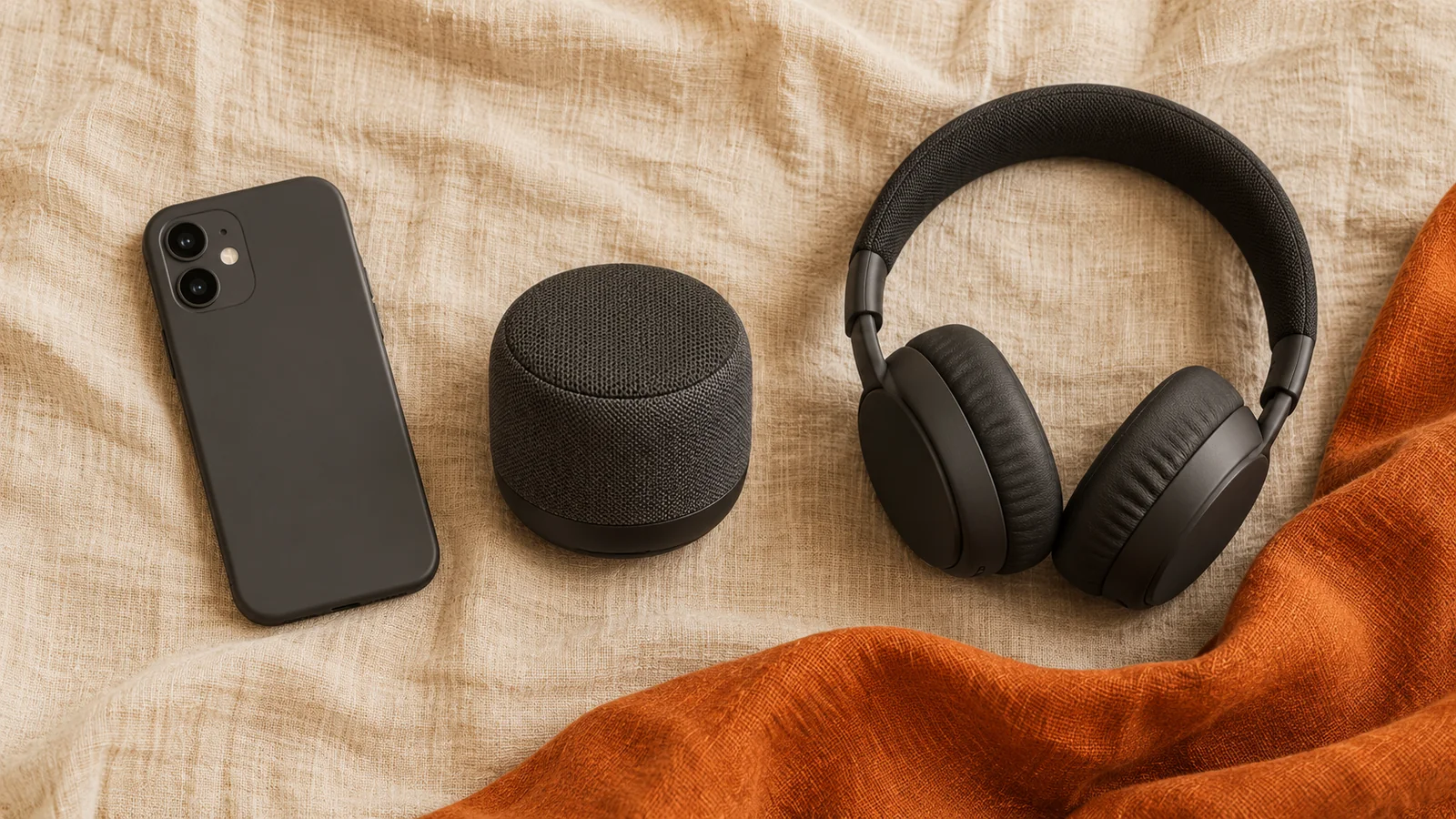
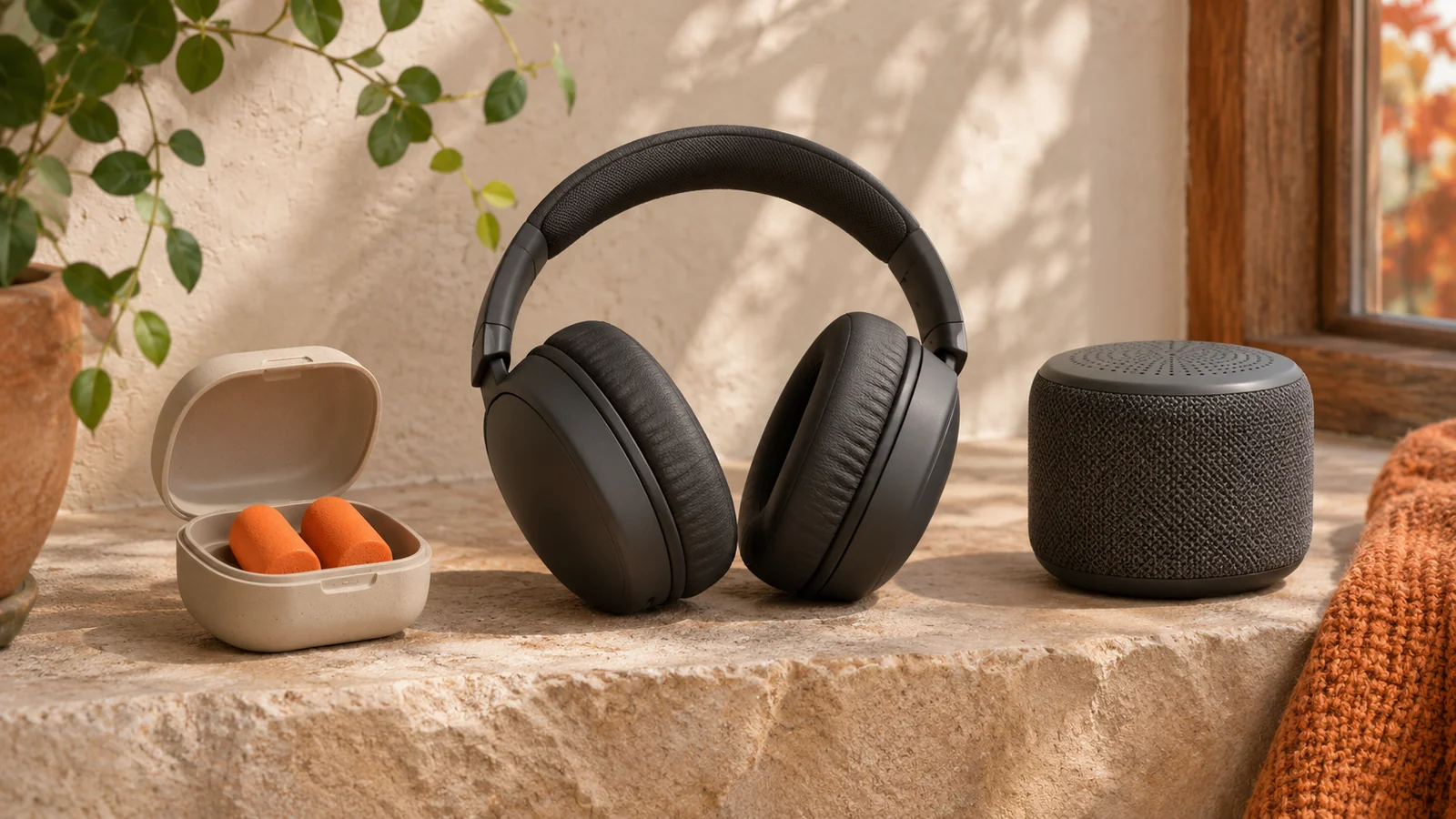
Earplugs, noise-cancelling headphones, and masking have different functions. Hearing protectors reduce incoming sound. Active noise cancellation uses electronics to reduce some external noise. Masking adds another sound to make an existing sound less noticeable. Before choosing a tool, separate the job you want it to do from claims about hearing protection or treatment.
The distinction matters if you are managing sound sensitivity as well as a noisy environment. A product that makes a journey feel less noisy has not necessarily established protection from hazardous sound, clinical suitability, or relief from sound-related pain.
What do earplugs and protective earmuffs do?
NIDCD describes hearing protectors as devices that reduce the intensity of sound entering the ears. The main forms are earplugs and protective earmuffs. Their performance depends on the product, fit, and correct use.
Inspect the intended use and instructions. A product's shape, padded earcups, or marketing name does not tell you how it has been tested. Keep protective earmuffs distinct from ordinary headphones that happen to cover the ears.
The first question can be about the environment: can the source be turned down, can you move away, or can the activity happen elsewhere? NIDCD lists reducing or avoiding the noise among ways to protect hearing. A wearable device is one part of that discussion.
Does active noise cancellation count as hearing protection?
NIOSH's guidance, updated in October 2026, explains that active noise cancellation can be built into headphones or earbuds. It says those products should not be considered hearing protection unless labeled with a noise reduction rating, or NRR.
An NRR is also not a guarantee of the protection an individual receives. The same guidance emphasizes fit and identifies individual fit testing as the best way to check a worker's actual protection. Workplace noise decisions belong within the relevant hearing-conservation and safety process.
For a consumer product, ask the manufacturer what it is designed and tested to do. “Noise cancelling” alone does not answer whether it is a hearing protector. Nor does a protection rating show that a particular person with hyperacusis will find it comfortable.
How is masking different?
Masking supplies another sound. It does not physically remove the original sound from the environment. In tinnitus care, ASHA describes masking and other sound-based approaches as part of individualized management.
A background sound selected for one purpose should not be treated as a universal response to misophonia, hyperacusis, or pain. “Turn it up until the other sound disappears” is not a suitability assessment. Device settings also do not supply a personal safe-listening limit.
Check whether the product offers playback, live filtering, or both. Our misophonia app feature guide explains why these functions should be evaluated separately. A sound library does not imply live trigger filtering.
Separate hazardous noise from your own symptoms
General noise-risk guidance addresses the possibility of hearing damage from exposure. A description of what is tolerable for most people does not set the level you should endure if you experience pain or discomfort.
Tell a qualified hearing professional about both concerns: the environment you need to be in and your actual symptoms. Ask how protection, communication, and the activity itself should be considered together. Do not remove needed protection in a hazardous setting to test your tolerance, or increase sound to prove that you can manage it.
The NHS advises stopping sound therapy and contacting a doctor if sounds are uncomfortably loud or painful. Our questions before sound practice can help you discuss an activity without adopting someone else's routine.
Compare products by the question they answer
You can keep a short comparison note without choosing a winner in advance:
- Job: Is the aim rated noise protection, communication, reducing perceived environmental noise, or optional audio playback?
- Evidence: What does the manufacturer actually document about that function?
- Fit and use: Who can help check fit, and what instructions apply?
- Practical needs: Can you receive necessary speech, warnings, or instructions?
- Symptoms: Is there pain, discomfort, or another response you need to discuss separately?
- Unanswered question: What information would change your decision?
For example, someone planning a restaurant visit may need to discuss seating and an exit plan before deciding whether a device belongs in that plan. The restaurant planning guide provides a request template.
Haelan's journal can hold your own device questions alongside educational lessons in the hyperacusis app. It does not fit-test hearing protection or measure sound at your ears. Keep the record tied to the decision you are making, then take unresolved protection or symptom questions to the appropriate professional.
Return to the condition guide ↗
Sources & further reading
Publication approved by the Haelan publisher. Sources checked with AI assistance. Written by the Haelan team; not independently clinically reviewed. Cover: AI-generated editorial illustration. About our content
Build a practice for your daily life.
Explore guided lessons, calming practices, and journaling tools with Haelan. Keep your learning and reflections in one place.
Explore Haelan for hyperacusis