
Key points
- Difficulty with bedtime sounds does not by itself establish misophonia; describe both the reaction and the sleep disruption.
- Discuss arrangements while awake, including what to do if someone needs to change rooms or pause a conversation.
- Breathing pauses, gasping or choking during sleep, or persistent daytime tiredness deserve medical discussion rather than being treated only as a sound problem.
If breathing, snoring, or another repeated sound makes sharing a bedroom difficult, describe the reaction and the sleep problem separately. Discuss a practical nighttime arrangement while you are both awake. The sound alone cannot establish misophonia, and symptoms suggesting a sleep-breathing problem need their own medical assessment.
A useful plan covers what you want to agree before bed, what happens if an arrangement is not workable, and when you will revisit it. The examples here support that conversation; they are not a treatment for insomnia, misophonia, or sleep apnoea.
Explain what makes the night difficult
The misophonia consensus definition includes nasal sounds such as breathing among reported triggers, while recognizing that triggers and responses differ. Being kept awake by a sound does not automatically mean that your experience fits that definition.
You could say, “When I notice the repeated sound, I become focused on it and find it difficult to settle.” If you also experience pain, fear, anger, or another response, describe it in your own words. Avoid treating someone else's trigger description as a template you must match.
Name the practical consequence too: difficulty falling asleep, waking repeatedly, leaving the room, or conflict about what to do next. Those details give a care discussion a clearer purpose than debating whether the sound is loud enough to bother someone.
Keep possible sleep-breathing concerns separate
Snoring can raise a question beyond the listener's sound sensitivity. The NHS advises medical discussion for symptoms such as breathing that stops and starts during sleep, gasping or choking noises, or persistent daytime tiredness. These can be signs of sleep apnoea and should not be dismissed as merely an irritating sound.
If you have noticed those features in yourself or someone you share a room with, explain what you observed to a clinician. A recording or a consumer app is not required to raise the concern, and this article cannot establish its cause.
Do not ask someone to stop prescribed breathing equipment or change a treatment to make the room quieter. Raise sound or comfort difficulties with the service providing that care so the medical need and the shared-room difficulty can both be addressed.
Agree a plan during the day
Choose a time when you are not already trying to sleep. A hypothetical opening is: “I want us both to get rest. Could we agree what to do if sharing the room is difficult, so we do not have to negotiate it in the middle of the night?”
Possible discussion points include where another sleeping space is available, whether different settling times are workable, how to communicate a change of room, and when to review the arrangement. These are household planning options, not a universal recommendation about sleeping together or apart.
Make practical constraints explicit. A shared home may have no spare room; another arrangement might create access, care, or safety difficulties. The useful plan is the one you have actually discussed, not a rule copied from another couple's account.
Our family communication guide includes wording for explaining the experience without blaming the other person.
Be specific about any sound tool
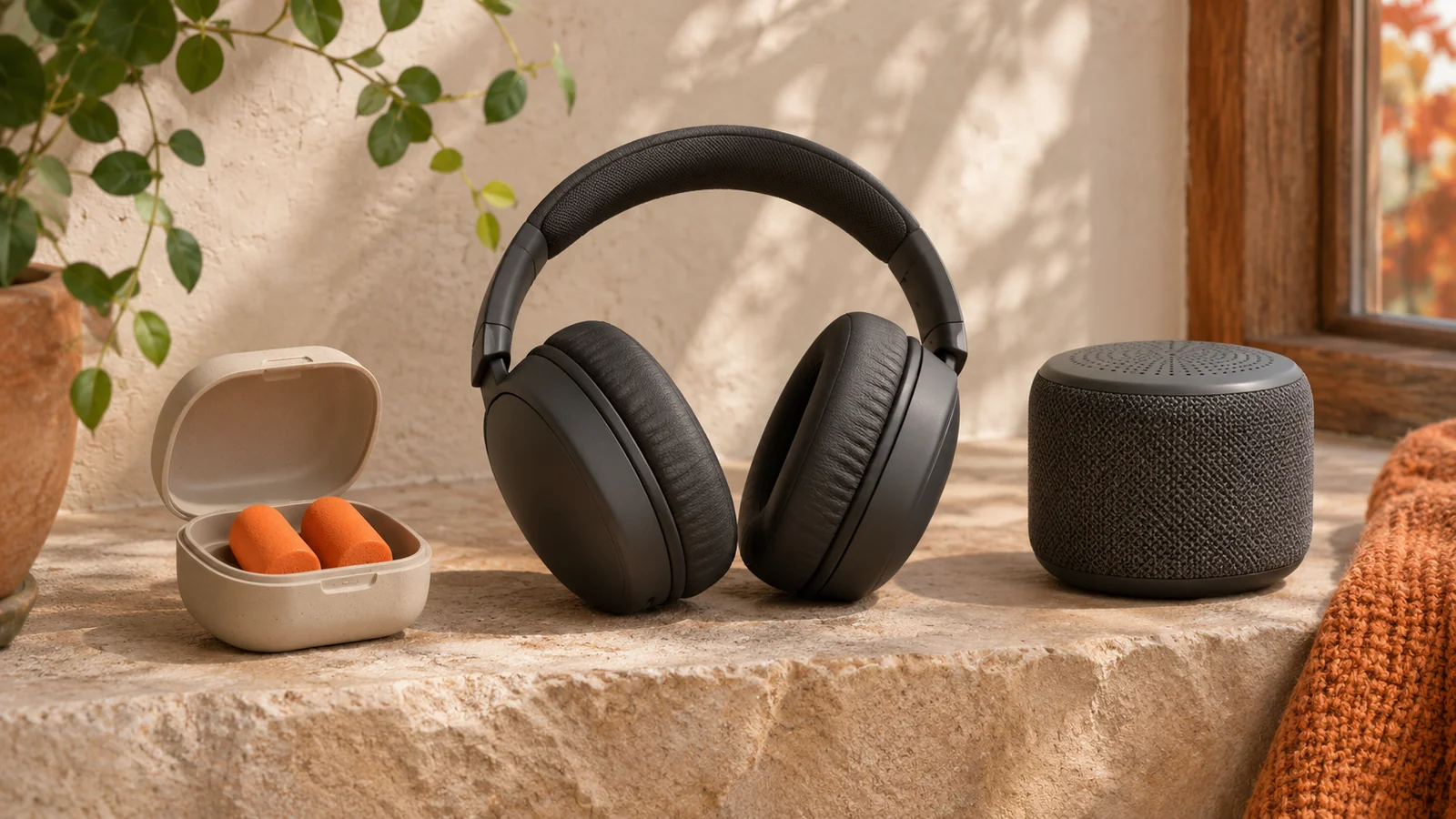
If you are considering earplugs, headphones, or background audio, first identify the intended function. Reducing incoming sound and adding playback are different activities. Check whether you can still receive necessary alarms or other safety information, and discuss suitability if sound causes discomfort or pain.
Avoid increasing playback volume simply to overpower a difficult sound. A product described as a sleep aid does not establish that its audio is suitable for your symptoms. The sound-tool comparison explains these distinctions.
Haelan includes optional guided practices and a journal. You can use the journal to keep a daytime question or an agreed plan. This does not establish that Haelan treats sleep problems or that an audio session should run overnight.
What does recent sleep research tell us?
A 2026 questionnaire study involving 607 young adults examined sleep quality, sound tolerance, auditory performance, and anxiety. Poorer reported sleep quality was associated with lower sound tolerance and other reported difficulties.
That association does not establish which problem caused another, and a young-adult questionnaire sample does not represent every person with diagnosed misophonia. The study did not test whether a particular sleep arrangement or app improves misophonia.
For your own care discussion, it is enough to describe both concerns: “Sound reactions are affecting my nights, and I am also struggling during the day.” You do not need to decide the direction of the relationship before seeking help.
Copy a short shared-room plan
Use these prompts to prepare one conversation:
- What we each need: Rest, access to equipment, or another practical need.
- What is difficult: One description of the sound reaction and one of the sleep disruption.
- Arrangement to discuss: What could happen before or during the night?
- If it is not workable: Where can someone go, and how will they communicate?
- Medical question: Is there a breathing, hearing, or persistent sleep concern to raise separately?
- Review point: When will we talk about what happened?
If disrupted sleep or sound-related distress persists, seek individualized care. Bring the question that remains unresolved and any naturally observed symptoms. A nighttime plan can organize a household decision while the clinical questions are assessed.
Return to the condition guide ↗
Sources & further reading
Publication approved by the Haelan publisher. Sources checked with AI assistance. Written by the Haelan team; not independently clinically reviewed. Cover: AI-generated editorial illustration. About our content
Build a practice for your daily life.
Explore guided lessons, calming practices, and journaling tools with Haelan. Keep your learning and reflections in one place.
Explore Haelan for misophonia